

An Important New Longevity Paper
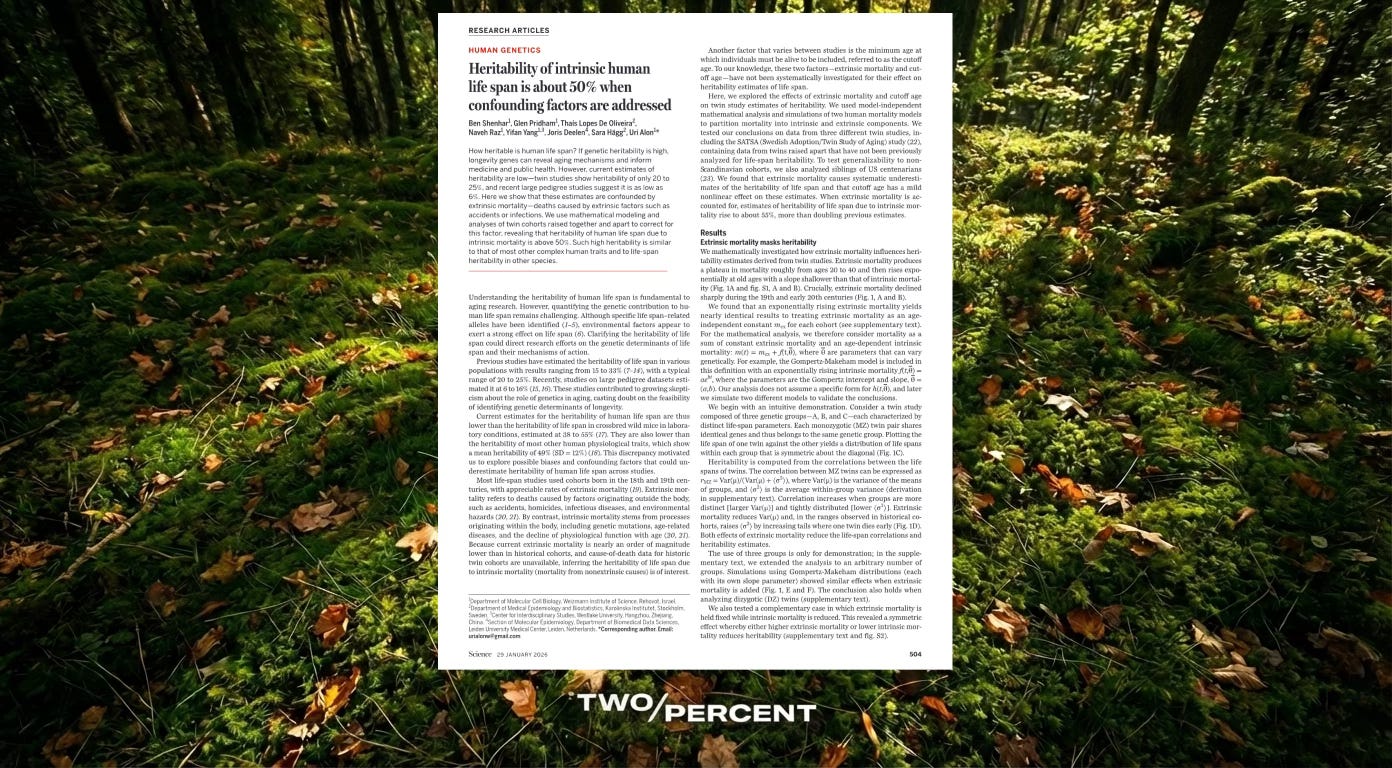
A major new paper reveals a flaw in how we calculate lifespan.

I don’t think we need statistics to see that longevity has become a cultural obsession.
We see it everywhere: in supplements and protocols promising extra years, biohacks trending on social media, and rich people chasing immortality.
But here are some stats anyway:
The longevity market is expected to grow 80% this decade, from $15 trillion to $27 trillion.
In 2024 alone, longevity startups raised $8.49 billion in investment—a 220% increase from the year before.
Entrepreneur magazine called longevity “the next gold rush.”
Which raises the obvious question: Do any of these new longevity practices work? And if they do, how much extra life can they really buy us?
A new study forced those questions into the open. And the answers may surprise you.
It suggests our understanding of longevity has been deeply flawed.
Depending on what the data show, the study either strengthens the case for modern longevity practices—or eviscerates them.
The answer changes what’s worth your time—and your money.
Today you’ll learn:
Surprising new findings about how long you can live.
The specific flaw in 100 years of data that misled scientists about aging.
The exact percentage of your lifespan controlled by DNA vs. lifestyle.
What longevity practices have hope—and which are all hype.
Check out Montana Knife Company—a gear company that helps me not die
I’ve been carrying MKC knives into the wilderness for years. They’re bombproof, razor sharp out of the box, and made in Montana. My everyday carry: The Mini Speedgoat 2.0. Check them out here and mention you heard about MKC from Two Percent. MKC knives sell out quickly, but here’s what’s currently in stock.
Keep reading with a 7-day free trial
Subscribe to Two Percent with Michael Easter to keep reading this post and get 7 days of free access to the full post archives.