

Why Elite Soldiers Fail at Survival School
Busy moms often outlast Navy SEALs in the desert—and what the training mismatch tells us about navigating life's challenges.

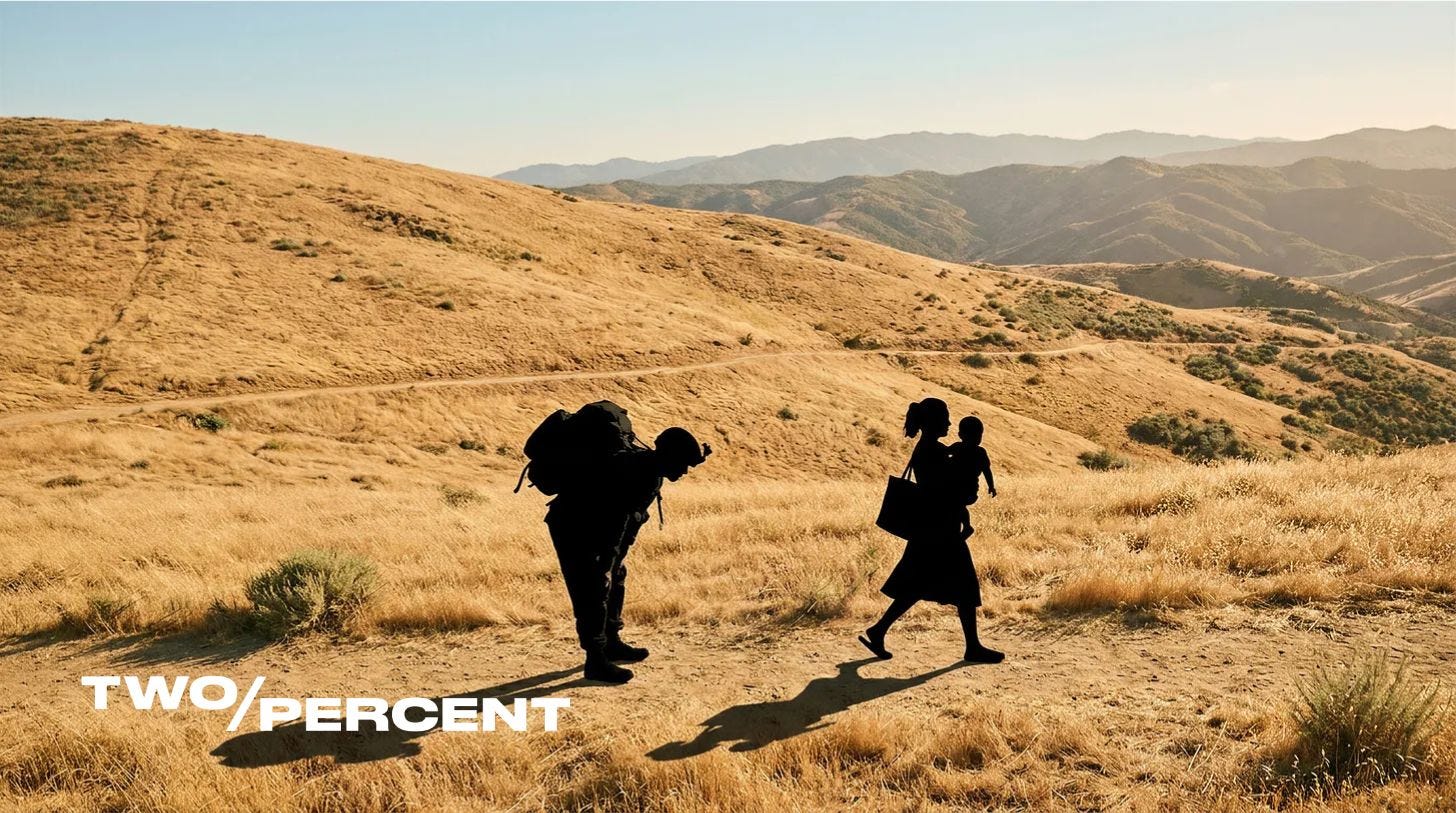
Navy SEALs are some of the toughest human beings on the planet. No doubt. “Never quit” is a mantra across Special Forces.
But many of them do quit—under circumstances many everyday people don’t.
“We get a lot of badass active-duty and former Navy SEALs and Special Forces soldiers on our courses,” Jay Carson, former Executive Director and now Instructor at the Boulder Outdoor Survival School (BOSS) told me. “We’ve noticed they often struggle and do the worst. A surprising number fail.”
Meanwhile, some of the most unassuming people finish BOSS survival courses strong. People like busy moms, middle school principals, and hippies without a hardcore bone in their body.
BOSS has been called “the toughest survival school in the world.” Instructors take a small group out into the desert of the Colorado Plateau and teach them to live off the land—for one to four weeks with only the clothes they’re wearing and a wool blanket, poncho, water bottle, knife, and a stainless-steel cup. No tents, sleeping bags, or other gear.
Today’s post explores the psychology behind why a SEAL would quit before a busy mom—and how it can help you get through challenges in your own life, whether you signed up for them or not.
We’ll cover:
The reason special operations soldiers tend to struggle on BOSS courses while a middle school principal doesn’t.
The psychological mechanisms at play, from two of the most-cited psychological researchers.
How I saw this phenomenon play out when I ran a group Misogi Challenge in Costa Rica, and how Jay Carson saw it in his own life.
What that can tell us about navigating life’s challenges.
How to build this skill on purpose, so you’re ready when life hands you a challenge you didn’t sign up for.
Quick housekeeping
In Wednesday’s post, we covered Gary Brecka and I’s disagreement about longevity on Sean Hannity’s podcast (a dive into how realistic life extension is).
Friday’s Gear Not Stuff covered the science of a better workspace. We spend around 90,000 hours of life at work—this gear makes those hours better.
On Thursday’s Two Percent Podcast, Alex & Books and I covered our favorite underrated books and what you can learn from them.
Check out our partners:
💪 David Protein Bars have the highest amount of protein per calorie of all protein bars. They’re a great option for anyone who wants protein on the go without the excess sugar and fat of most bars. Visit DavidProtein.com.
🧪 Function Health offers 5x deeper insights into your health than typical bloodwork. The info can guide you into feeling better every day. It helped me identify a mineral insufficiency—and was cheaper than my insurance. Go to my page here to sign up, receive a discount, and pay just $340.
The Observation
BOSS instructors have been talking about this phenomenon for years. They’ve landed on one big reason:
Lack of Control
The biggest lesson of a BOSS course isn’t survival. It’s learning to be OK with the unknown.
“We want people to learn how to roll with what comes their way, and not try to bend the situation to their will,” Jay said. “You have to surrender to the fact that nature is in charge. We want to teach you how to merge and mesh with what nature is doing and work with nature, rather than try to control it.”
When students ask for the plan—how far they’ll hike, what’s next, etc—BOSS instructors respond with, “we’ll see.”
After a collective hundreds of thousands of hours leading people through the desert, BOSS instructors have found that clinging to plans and trying to control the situation often hurts survival outcomes.
That’s because nature laughs in the face of plans. You can have a plan—but a storm might roll in, a water hole will be dry, or you’ll misread the terrain and get lost.
“Military types have often been trained to be in control,” Jay explained. “They’re seemingly used to knowing what’s next and controlling the outcome. They come in thinking ‘it will be this way and this way and this way and this way.’ But it’s not going to be like that. And many really struggle with that.”
People who do well tend to come from roles where unpredictability is normal.
Jay gave an example of a middle school principal who was in her 50s. “She rolls with all sorts of bullshit coming her way every day at school and no thought that she can control it, and she just navigates it,” he said. “And that person will crush a course where a Navy SEAL struggles with us not giving exact plans.”
BOSS instructors believe the lack of gear also contributes to this phenomenon. “The US Military has a big reliance on gear,” Jay said. “The thinking is that gear can solve any problem. Like, ‘we just need a better grappling hook, a better gun, better boots, whatever.’ BOSS is the opposite of that.”
If the tool disappears, so does control. “Sometimes the most rigid people really struggle with that,” Jay said.
Jay isn’t saying all military types do poorly. “We have plenty who do amazing,” Jay said. “But a surprising number can’t let go of the fact that they are not in charge and can’t know everything.”
And it’s also an observation of BOSS instructors, not a formal study. But it’s been consistent for decades.
For operators, the sources of stress change from danger, pain, and exertion—common in those roles—to ambiguity, helplessness, and uncertainty about the plan.
The Science
Two phenomena are likely at play: psychological inflexibility and certainty orientation.
The psychologist Steven Hayes1 defines psychological inflexibility as “the rigid dominance of psychological reactions over chosen values and contingencies in guiding action.” It’s basically the inability to change because you’re locked into a fixed way of thinking and behaving.
Certainty orientation comes from the researcher Richard Sorrentino2. It’s when we struggle with ambiguity—preferring a clear plan of what comes next, known outcomes, and no surprises.
Control-based coping works beautifully. Right up until control isn’t available, then it can lead to poorer outcomes.
Together, they may explain why Special Operations Forces struggle on BOSS courses.
That said, each phenomenon has a flip side:
Psychological flexibility is the ability to pivot and switch strategies as events shift.
Uncertainty orientation occurs in people who find the unknown interesting rather than threatening. Ambiguity tends to lead them to figure out other plans rather than shut down.
Neither style is inherently better than the other—it really depends on the environment. Inflexible people often do better with a perfect plan that has no curveballs. And certainty-oriented people often do better when the structure is fixed.
But people who are both psychologically flexible and uncertainty-oriented tend to perform far better in unstructured and ambiguous situations, like a BOSS course.
It’s why a military guy can be great at breaching a specific compound at a specific time with specific gear—but can fare worse when an instructor won’t reveal how long a hike will be and where it leads.
On the other hand, for a middle school principal who rarely knows what a day will entail and when it’ll end, a “we’ll see” hike is just an average Tuesday.
The Good News: The Military is Now Studying This
The military has realized that clinging to plans was hurting resilience and readiness among soldiers. Not just in missions, but also in life.
They’re now studying3 a group of about 600 soldiers from Fort Cavazos (formerly Fort Hood) who are frequently deployed to high-risk areas.
They split the soldiers into two groups. All will get the military’s regular resilience training. But one group will get an extra two-day training teaching them how to deal with challenges without resorting to rigid control, and why trying to control everything doesn’t work.
Day 2’s module is literally titled “Rigidity as the problem.”
The study is still being conducted, and the researchers theorize the soldiers will end up more resilient and effective not only in high-risk areas, but also back home in normal life.
In Practice: Lessons From the Field
When I was leading a Misogi event in Costa Rica, one of the participants was about as high-achieving as a person can get. He had an MD from the best medical school, a PhD, had published hundreds of studies, and led large medical companies.
We started our Misogi at a trailhead in the jungle. “Start hiking,” I told the group.
He grabbed me. “Exactly how far are we going?” he asked.
“We’ll see,” I said.
Which prompted more and more questions about distance, time, and what comes next.
“We’ll see,” I said again.
Fourteen hours later, he’d finished.
He hugged me and said, “I’ve done Ironmans, and that was the hardest thing I’ve ever done. The not knowing is what made it so hard.”
He continued, “I realized along the way that I’ve spent my entire life planning and trying to control everything. Yet I accomplished this with none of that. I think this is going to reframe a lot for me.”
That is the exact type of revelation I want out of a Misogi—a chosen challenge.
And then there was Jay Carson, the BOSS Instructor quoted above, who faced a massive challenge he didn’t sign up for. His house burned down in the L.A. fires—a giant conflagration of all plans.
It was brutal on his marriage, kids, work, and finances, and the hardest year of his life.
But he discovered that he had “this extraordinary ability to deal with difficult situations because I’ve dealt with a lot of them on BOSS courses,” Jay said. His experiences at BOSS, where control got stripped away, helped him focus on what he could do with what he had rather than what he didn’t.
When his plans burned down with his house, he knew how to pivot and keep pushing forward. He’d “been there” in a situation he chose, which helped him in a situation he didn’t.
The takeaway
Russ Roberts argues in his book, Wild Problems, that the most important decisions and events in life—like who you marry, your career, whether you have kids—can’t be solved with a perfect plan. Instead, we can only focus on the person we want to be and become someone who can handle not knowing.
That’s what BOSS is really teaching, at a micro scale. And we can find those lessons in many ways.
We just need regular exposure to situations where our plans blow up—or are, at least, vague—and we figure it out regardless. This could be a long stint in the wilderness. A trip to a foreign place without an itinerary. A Misogi with an unknown outcome. Get creative—find something, anything, that has a chance to go awry.
As Jay discovered, these chosen challenges give us evidence that we can keep functioning in the ones we don’t choose.
It’s like the Zen Master Dizang said in the 10th century: Not knowing is most intimate. When we let go of preconceived notions and plans, we open ourselves to reality and other ways to move forward.
Have fun, don’t die, we’ll see …
-Michael
Hayes SC, Luoma JB, Bond FW, Masuda A, Lillis J. Acceptance and commitment therapy: model, processes and outcomes. Behav Res Ther. 2006 Jan;44(1):1-25. doi: 10.1016/j.brat.2005.06.006. PMID: 16300724.
Sorrentino, R. M., & Roney, C. J. R. (2000). The uncertain mind: Individual differences in facing the unknown. Psychology Press.
Peterson AL, Moore BA, Evans WR, Young-McCaughan S, Blankenship AE, Straud CL, McLean CS, Miller TL, Meyer EC; STRONG STAR Consortium. Enhancing resiliency and optimizing readiness in military personnel through psychological flexibility training: design and methodology of a randomized controlled trial. Front Psychiatry. 2024 Jan 5;14:1299532. doi: 10.3389/fpsyt.2023.1299532. PMID: 38250282; PMCID: PMC10797054.
Interesting discussion. We had to complete SERE at the AF Academy the summer after our freshman year. It was a 3-week course with scoring and if you didn't pass, you had to do it again the next summer. My 3 man team missed a checkpoint, and one more check mark on our score cards would have busted us. We cheated our asses off during three more days on the mountains to make sure the aggressor force never found its. This was the summer of 1976.