

Many Active People Accidentally Eat Too Little
Nutrition calculators lead you to undereat. Here's what to do about it.

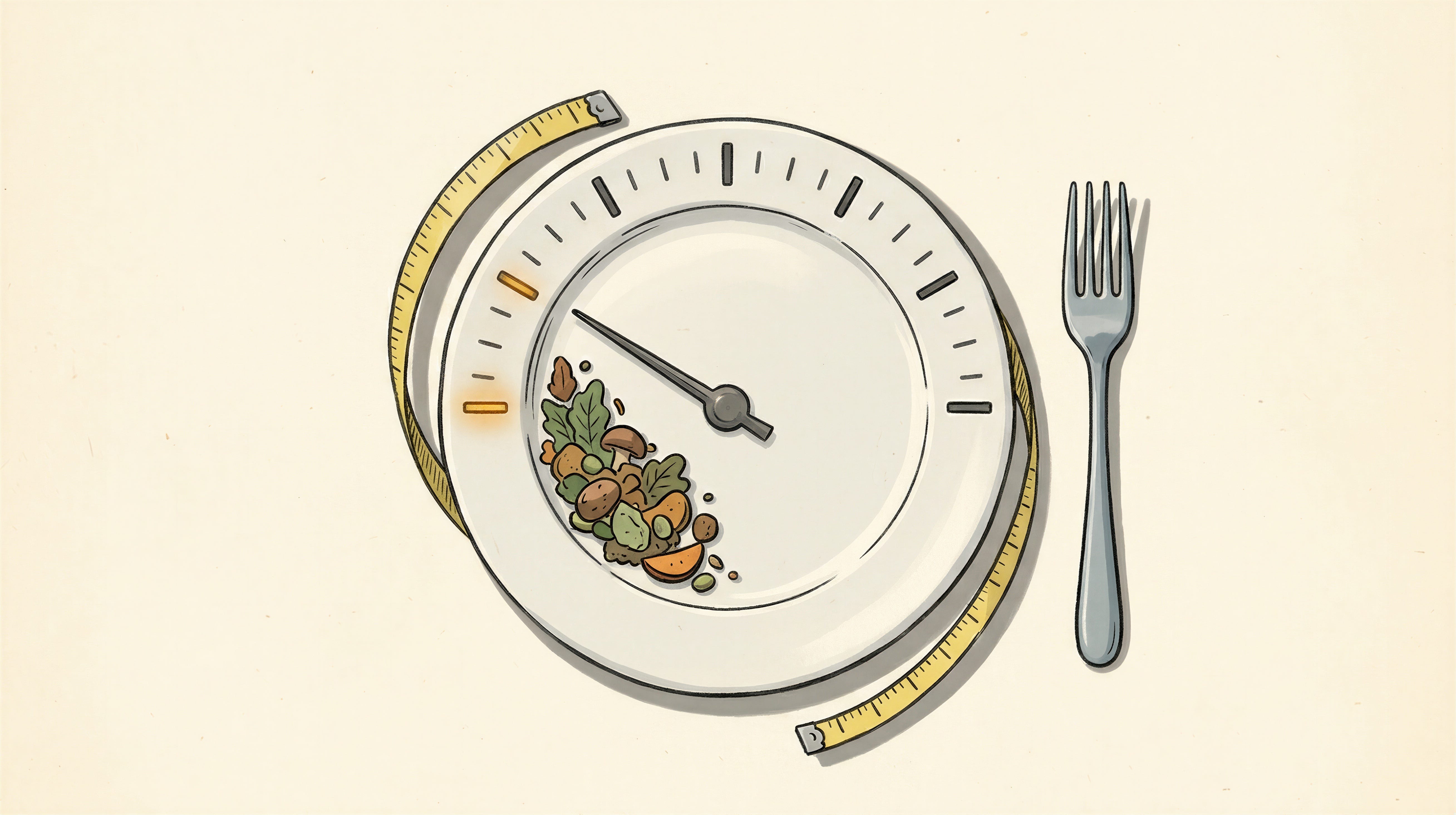
We get a lot of brands that want to advertise on Two Percent.
My standard response: I’m happy to consider their product for at least a month1. If I don’t love it and think it would be useful to the Two Percent community, we pass. I’d guess 95 percent of stuff doesn’t make the cut.
A nutrition tracking app called MacroFactor recently reached out. I ran them through the standard lines, then tried it for a month.
It’s the best nutrition tracking app I’ve found for active people who want to improve.
It helped me identify that I was under-eating. And when I started to eat more, I immediately felt and performed better.
You can check it out with a free 14-day trial here. Use code TWOPCT
Today we’ll cover
Why tracking your food can be a massive win for how you feel, perform, and look.
Why blanket calorie recommendations from online calculators and most apps can be off by 800 calories.
How MacroFactor solves data issues other trackers face with “dynamic adjustments.”
The hilarious origins of activity calorie burn estimations (and how wrong they are).
Why “flexible cognitive restraint” beats rigid rules for nutrition (and most things in life).
Quick housekeeping
Get full access to all three of our weekly posts by becoming a Member of Two Percent:
ICYMI:
Two great podcasts last week: Tuesday covered the World Cup (for people who watch soccer every four years) and why sports fandom is great for mental health. In the second, Dr. Tommy Wood, who wrote The Stimulated Mind and works with F1 Drivers, explained how to future-proof your brain from dementia and enhance your mind at any age. Listen here. Watch here.
On Wednesday, we covered a Harvard professor’s running and rucking prescription.
Friday, we ran a totally revamped AMA. Producer Robbie Hiser asked me 15 of your questions and pushed back on my thoughts.
The case for tracking—and its limits
At face value, tracking food is a giant pain in the ass. Usually, we eat with zero cognitive effort. And when we do think, it’s rather basic: eat the salad, not the Doritos.
But putting forth a bit of effort via measurement vastly improves the odds you’ll reach your goals—whether weight loss, gain, or maintenance; or improving your fitness performance.
Measurement—even for a few weeks—leverages a phenomenon researchers call the “Hawthorne Effect,” or “Observer Effect.”
It was discovered in experiments from the 1920s and 1930s on workers at the Hawthorne Works electrical plant. Scientists were there to observe and measure worker productivity. But let’s say you’re a worker, and a scientist is tracking your productivity. What are you going to do?
You’re going to be far more productive. The simple act of measuring a behavior tends to change that behavior, usually in a positive direction. The Hawthorne Effect is a pain in the butt for scientists conducting experiments, but we can use it to our advantage.
It worked for me. I first tried measuring and tracking my food about a decade ago. I didn’t change anything—just measured and tracked what I ate.
I had many “aha” moments in the process. The biggest came when I measured peanut butter, which I ate every day at lunch. What I thought was a 200-calorie serving was actually three servings—or 600 calories.
I naturally started eating a true serving of peanut butter, and everything else. Results came fast, almost by accident. And because I just made some portion sizing tweaks rather than completely overhauling my diet, the results lasted.
Greg Nuckols co-founded the MacroFactor app. He’s a former champion powerlifter who also started Strength by Science and is generally considered one of the brightest minds in the fitness world.
Surprisingly, Greg is rather non-evangelical about tracking. “Most people don’t want to track their food,” he said. “And it is kind of annoying. If you are able to reach your goals without tracking and you don’t like tracking, I would just say don’t track2.”
But if you want better, more precise results, years of data suggest tracking helps most people most of the time. The same principle applies elsewhere: If you want to overhaul your finances, track your spending. If you want to improve your business, track your revenue and the cost to acquire a customer.
Nutrition tracking is also not something you have to do for life. A couple of months of tracking pays massive dividends in the long run because you learn the foundations, and the lessons stick.
Section takeaway: Tracking your food leverages the Hawthorne Effect, helping you improve your nutrition without overhauling your diet. It’s also not something you have to do for life.
MacroFactor: The science and why it solves issues other trackers have
When you onboard with most apps, you give them your age, size, and activity level. They then estimate the calories you burn daily from your resting metabolic rate and activity level. Then you get a daily calorie target that doesn’t change.
The problem: Those targets are wildly wrong.
“Even the best BMR (basal metabolic rate, or the calories your body burns keeping you alive) formulas can be off by 700 to 800 calories,” Greg told me. “You can have two people of the same age, sex, height, weight, and muscle mass. If a BRM calculator estimates that they burn 1500 calories a day at rest, for one of them it might be 1,100, and for another it might be 1,900.”
Then come the problems with estimating calorie burn from activity. They’re basically made up.
“The standard (daily calorie burn calculators) everyone uses came from like a throwaway table in a textbook from 1993,” Greg said. “The textbook authors were just kind of like, ‘In our opinion, this is roughly how we’d describe the calorie burn of activity. Use this as a baseline, I guess.’” Again, some degree of wrong.
Which means the number most daily calorie burn calculators spit out are likely inaccurate by hundreds of calories. That leaves you either undereating or overeating for your goals.
Here’s how MacroFactor solves that. They have to start with estimations3. But as you use the app, you also log your daily weight. How your weight changes over the next month of data adjusts your daily calorie target.
If your goal was to maintain weight (as mine was) and your weight trended upward for a couple of weeks, the app reduces your daily calories. If you wanted to gain weight and your weight was stagnant, it would adjust your calorie intake upward.
This is called “dynamic adjustment.” And the idea is this: your metabolism isn’t static, so your nutrition plan shouldn’t be either.
“If you know the rate at which someone’s weight is changing and how much they’re eating, you can have a pretty good idea of how many calories they’re burning,” Greg said. “If you have a computer in your pocket, there’s no reason it can’t just do that math for you.”
It’s a complex, scientifically validated formula Greg originally built in a spreadsheet to help clients from champion lifters to everyday people reach their goals.
The app is that formula in a tracking app—a user-friendly experience with a database of nearly every food, plus the ability to snap a photo of your food and get a close calorie estimation.
How it worked for me: Online calorie burn calculators—including ones PhD scientists recommended to me—told me to eat about ~2800 calories a day. So that’s about how much I ate.
When I started using MacroFactor, I learned that actually wasn’t enough food for me. The app increased my calories, and I landed around 3,100 a day.
I woke up feeling more energized and better recovered. It’s amazing what 300 extra calories a day feels like.
Years of data show that undereating leads to feeling more tired, decreased performance, increased risk of injury, and more. If you’re really undereating, it can lead to depression, as we learned in this post.
When I told Greg about my experience, he said, “People like you trying to gain weight or maintain weight when they’re active are a really underserved demographic in the nutrition space.”
He continued, “The same math that applies to losing weight applies equally and identically to gaining or maintaining weight. Unfortunately, most nutrition apps push people to weight loss.”
That’s where I think tracking, done right, pays off for active people. Yes, it can help you lose weight. But it can also make sure you’re eating enough. And if you’re eating enough, you'll feel better every day. That was worth the hassle.
Section takeaway: Most apps give you a static calorie target—a rough estimate that never changes. Those estimates are wrong. MacroFactor continuously recalculates your nutrition needs based on real data.
No Food Shaming + Flexible Cognitive Restraint
To Greg’s point, most nutrition tracking apps are pitched and designed for weight loss.
We see this in pop-ups that shame us for entering a food that has too much fat or sugar. Or when we get a big red warning when we go over a calorie target.
Not only do these warnings make you feel bad, but years of behavioral research also suggest they can backfire.
The science hinges on two ideas: the “abstinence violation effect” and “rigid versus flexible cognitive restraint.”
Abstinence Violation Effect
The abstinence violation effect4 occurs when a minor setback feels like total failure, leading us to go off the rails and give up completely.
“If you go, say, 200 calories over your calorie target and the app tells you you screwed up, that can flip a switch in your head that says, ‘I already failed. I might as well just eat a whole pizza now.’” And that sets you back much more.
“We chose to display things neutrally,” Greg said. “If you go over your target, nothing changes, nothing suggests you screwed up or did something bad. So it’s a lot easier to look at that and say ‘Okay, I went a little over my target, but I’m still close and things are fine.’ That mindset is more conducive to sticking with things long term.”
Rigid Vs. Flexible Cognitive Restraint
The food psychology literature shows a massive difference in outcomes between the two approaches to nutrition goals.
Rigid restraint is rule-driven. If you deviate from those rules and targets, “that’s a violation. Like you’ve done something bad,” Greg explained. “And a lot of the messaging in the fitness industry is based on rigid restraint.”
With flexible cognitive restraint, “There’s a direction you’re pointed in, but you consider trade-offs and don’t dichotomize things as good or bad,” Greg said. “If you deviate from your goal, it’s not a failure. You’ve thought it out, realize that even if you’re moving towards your goal a little bit slower, you’re still making progress, and you don’t judge yourself for deviating from your targets.”
The literature is very clear that flexible restraints are more effective for long-term goal adherence5.
MacroFactor is designed around that. But it’s an idea you can apply to fitness, finances, and work habits.
Section takeaway: Behavioral research shows that rigid, rule-based approaches to nutrition backfire. MacroFactor is designed around flexibility, and that same principle applies to any goal.
If you have no desire to track, as Greg said, “Don’t.”
But if you do, try MacroFactor. You’ll probably learn something. Maybe, like me, it’ll be something that helps you live better.
Have fun, don’t die, eat enough,
Michael
Unless a brand is truly ridiculous, like a fringe supplement. Then it’s an immediate no thanks.
Tracking can be a trigger for the small subset of people (~1% of the population) who have suffered from disordered eating. If that’s you, don’t do it. Just like a problem gambler shouldn’t hang out in a casino, avoid it. FWIW, there’s no reason to think tracking causes eating disorders. Rather, people with eating disorders are more likely to track their food. This gets confused often.
I’ll note here that their onboarding process—which asks really practical and easy to understand questions—helps them get closer to the right starting point.
Collins, S. E., & Witkiewitz, K. (2013). Abstinence violation effect. In M. D. Gellman & J. R. Turner (Eds.), Encyclopedia of behavioral medicine.
Péneau S, Bénard M, Robert M, Allès B, Andreeva VA, Courtois F, Touvier M, Leys C, Bellisle F. Validation of the Flexible and Rigid Cognitive Restraint Scales in a General French Population. Int J Environ Res Public Health. 2022 Sep 30;19(19):12519. doi: 10.3390/ijerph191912519. PMID: 36231817; PMCID: PMC9564632.
I thought the code auto-populated for the extended free trial. It does not.
The code is TWOPCT
Very much looking forward to comparing this app to cronometer. I was only offered 1 week free trial, not 2.