

Traditions Are an Evolutionary Superdrug
Traditions are an evolutionary super-drug for anxiety, but modern life is killing them. Here's the science on building ones that last.

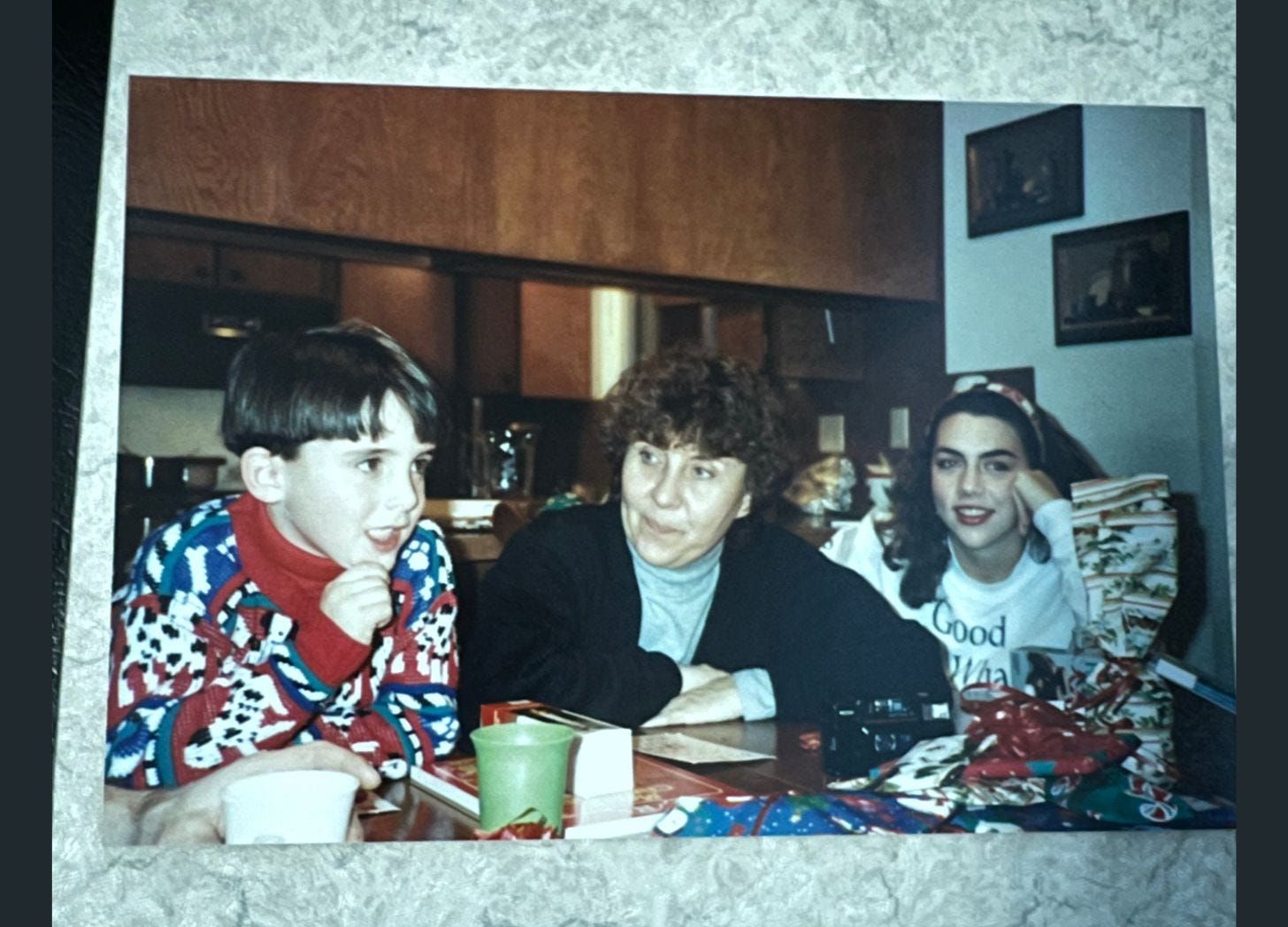
On the evening of December 24th, from 1986 to 2020, I did the same thing: I played bingo. I’m talking hours of highly competitive bingo.
My extended family—anywhere from 12 to 25 of us, depending on the year—gathered at my aunt Shauna’s house on Christmas Eve. After dinner, we’d clear the table of soup bowls and pile it high with cheap but useful wrapped prizes. Each person would carefully select a bingo card. For the first 12 years of my life, this was the most critical decision I made all year.
My grandmother would take to a tall stool overlooking the table, and deliver a short speech.
“Welcome to Nana’s bingo parlor. Don’t clear your cards after someone gets a bingo—we play until I say we’ve had enough bingos. Then, when I say, you can clear your cards and we’ll start again—only when I say. If you get bingo, you can choose a prize from the table or steal a prize won by another player. And NO CHEATING.”
At “NO CHEATING,” she’d eye certain family members.
Then she’d roll the bingo hopper and call numbers—B-11, N-44, O-73, I-19.
Family squabbles erupted over items like chip bag clips, magnetic to-do note pads, dental floss, and more.
There were particularly historic showdowns. In 1994, my cousin Jena and I went back and forth maybe fifteen times—stealing, losing, and re-stealing—a forest-green, maroon, and mustard-yellow padded Trapper Keeper.
Jena won. The loss crushed my young holiday spirit.
The next morning at Christmas, Jena wrapped the Trapper Keeper and gave it to me. Everyone cried. The Trapper Keeper still exists somewhere in our family.
Eventually, my grandparents passed away, and the family Christmas Eve bingo tradition passed with them.
Time happens. Traditions die.
That story holds the point of today’s post: Traditions carry hidden powers. They shape us, steady us, and teach us who we are. They’re worth maintaining. And when they eventually fade, they’re worth rebuilding.
Today you’ll learn:
The science of traditions: Four research-backed reasons why they improve our mental and physical health, forge social bonds and trust, and teach us critical lessons about being human.
Why modern life is quietly killing traditions, and how that’s impacting us and our kids.
The three laws of traditions—brilliant scientific work showing three features a tradition must have to make us better, healthier people.
Quick housekeeping
I’m taking your questions for an end-of-year Q&A! Submit your questions here.
Note: We originally ran this piece last year. But it’s important enough and timely enough that I’ve updated it with new thoughts and research.
If you need a last-minute gift, consider giving someone a year of Two Percent. We’re putting annual gift subscriptions on sale (10% off) from now through 12/25.
Thanks to our partners!
Function Health, which offers 5x deeper insights into your health than typical bloodwork. You’ll learn critical information that can guide you into feeling better every day. It helped me identify a mineral insufficiency. Go to my page here to sign up, receive a discount, and pay just $340.
Maui Nui: Eat ethically. Maui Nui’s harvests wild Axis Deer, which are invasive to Maui. They’re also the healthiest meat on planet earth. Try the Stick Starter 6-Pack at $39 each. High-protein, low-calorie, and wildly clean.
Get your engines ready for a new Two Percent Challenge, happening the entire month of January and for Members only. Join us—it’ll help you sever the head of 2026 and mount it on your wall.
The power of tradition
In his book How Traditions Live and Die1, the scholar Oliver Morin explains that traditions aren’t unique to humans. Elk bugle and fight during the rut. Salmon move from freshwater to saltwater and back to spawn.
But humans take traditions further. Ours are more elaborate, symbolic, and emotionally rich. They didn’t evolve just to get things done—they evolved to encode meaning that improves wellbeing.
Long before books or schools, traditions stored knowledge: how to behave, who to trust, and what mattered. They still do.
Morin argues that traditions are among the most powerful psychological and social tools humans have. They:
Help us remember and learn what matters.
Traditions provide stories, vivid imagery, and memories of those we love and admire. This transmits information about who we want to be and how we should behave.Take my family’s bingo tradition. There’s a good reason my grandmother and not a young cousin ran the show at bingo: We’re signaling that elders have wisdom and leadership qualities. The arbitrary rules—only Nana clears the cards—weren’t flaws. They were features.
My strongest memories of my grandmother are from those bingo games—she was a hilarious and fun-but-firm leader. I admired those qualities and still try to mimic them.
Build social bonds and group identity.
Traditions generate a sense of belongingness to groups and strengthen in-group loyalty and cooperation. By participating in the same traditions, we agree that we’re “in this together.”Christmas Eve bingo was weird. But it was our weird thing. Playing meant belonging. When Leah first played bingo with us, it was her “official” welcome to the family.
Give us stability.
Life is uncertain and chaotic. Research shows traditions reduce anxiety and stress, and increase a sense of control—especially during periods of uncertainty, change, or loss. Psychologists call this identity continuity: the feeling that you’re the same person across time. It’s a major predictor of resilience and mental health.As I went through the awkwardness of jr. high, the lawlessness of high school, and the adriftness of moving out of state for college, holiday bingo reminded me that I had a core group who always accepted me and took me in.
Transmit social norms and rules.
Traditions are similar year to year for a good reason: They help us pass down critical values.NO CHEATING was a valuable lesson that went far beyond my family’s bingo table. And any rule changes had to be voted on, teaching fairness and cooperation. Everyone counted.
In the rest of this letter, you’ll learn:
The 3 laws of tradition: The specific “ingredients” required to make a ritual stick.
Why traditions die: The forces that are killing family rituals (and how to fight them).
How to build a new tradition: And the specific story of how I replaced bingo with a new tradition that fits my life now.
It’s everything you need to build a lasting ritual for your family every holiday season.
Keep reading with a 7-day free trial
Subscribe to Two Percent with Michael Easter to keep reading this post and get 7 days of free access to the full post archives.