

The Brain Glitch That Makes Modern Life Feel Miserable
Harvard scientists found that our mind invents problems (and how to override it).

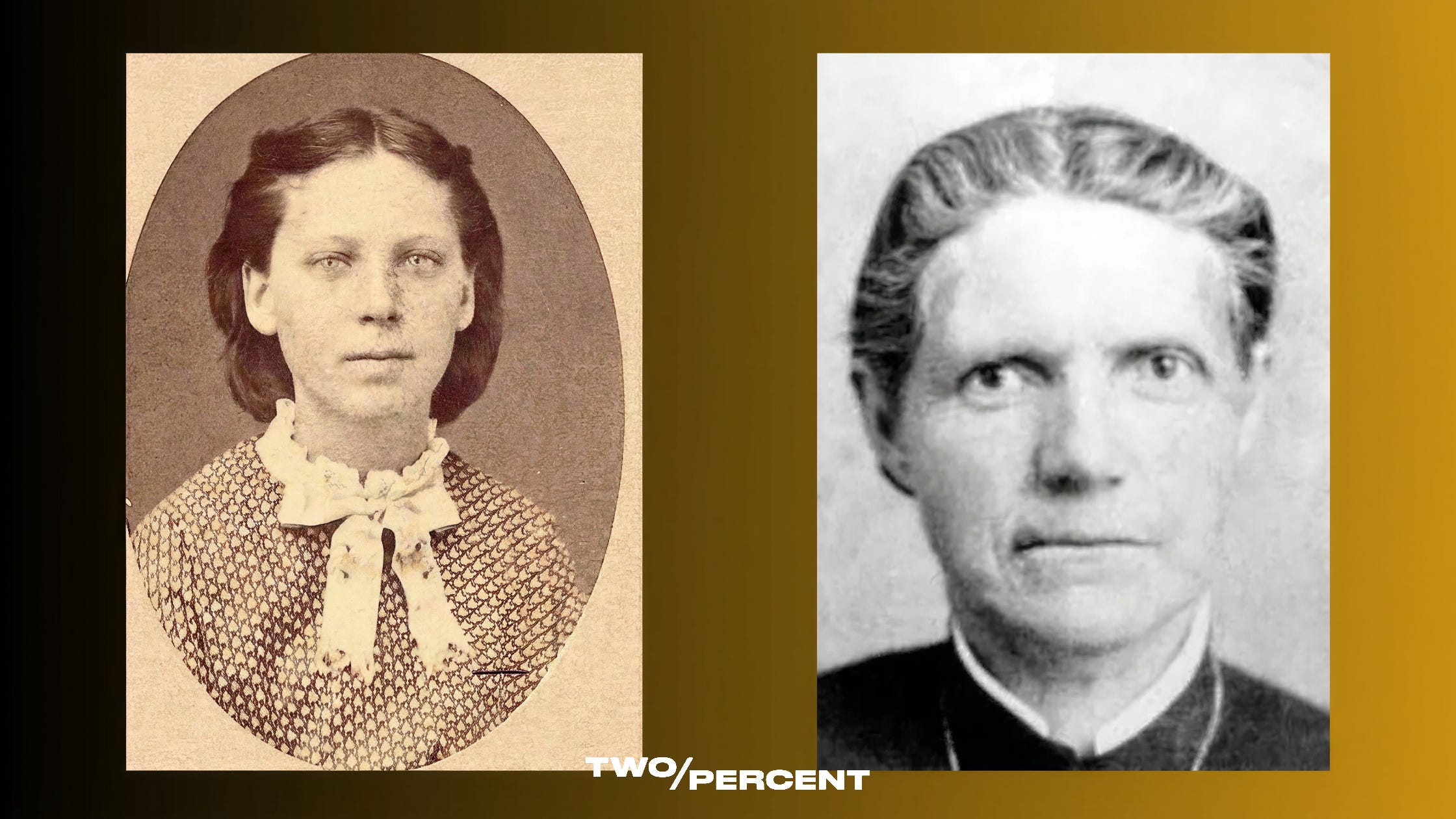
Friday, July 24th, was Pioneer Day in Utah.
I grew up in that state. The holiday always reminds me of a woman in my family who made the journey the day celebrates.
Her life story resets what I think counts as a problem. It also happens to illustrate a psychological concept discovered by Harvard scientists—a quirk in the human brain that explains why modern life can feel harder than it actually is.
Pioneer Day celebrates the arrival of Mormon settlers in Utah. Mormons in the 1830s and 1840s were persecuted for their faith. They’d been violently driven out of Ohio, Missouri, and Illinois. Their leader, Joseph Smith, was assassinated by a mob in Illinois.
Smith’s successor, Brigham Young, realized that Mormons would probably always be persecuted so long as they lived in the United States. He decided they should escape the U.S. and establish a Mormon colony somewhere in the wild area that was then Mexico.
In early 1847, Young gathered about 150 from the faith. They began to head west into a savage landscape with no particular destination.
After months of hard trekking, on July 24th, 1847, historians explain what happened next—the basis for Pioneer Day:
Young and his followers emerged out onto a broad valley where a giant lake shimmered in the distance. With his first glimpse of this Valley of the Great Salt Lake, Young reportedly said, “This is the place.” That year, some 1,600 people arrived to begin building a new civilization in the valley. The next year, 2,500 more made the passage. By the time Young died in 1877, more than 100,000 people were living in the surrounding Great Basin, the majority of them Mormon.
My great-great-great-great-great aunt, Nellie Unthank, was one of those 100,000 pioneers.
But getting to Utah wasn’t exactly a first-class flight.
Today, you’ll learn:
A 1856 survival story that reframes modern hardship.
How a 2018 Harvard study uncovered the science of first-world problems (and why comfort makes it worse).
Why your brain is hardwired to create problems to save energy.
How to override it, get some perspective, and live better every day.
Quick housekeeping
ICYMI:
Wednesday’s post was Don’t Die: Sprint. We covered the evolutionary and statistical case for sprinting.
Friday we showed how many protein claims on food are misleading, and a simple formula to learn if a food is actually a good protein source.
On the podcast: Robert Young Pelton on lessons from the world’s most dangerous places; Dr. Gabrielle Lyon on muscle and building it.
Shoutout to our partners:
Momentous made a new creatine that’s 99.9% pure and the best on the market. It has 10x fewer impurities, 2-5x tighter heavy metal limits, 10x lower microbial load, and no microplastics. Momentous is obsessive about making its products better, safer, and more effective. Buy it here.
MacroFactor is the best nutrition app I’ve found. MacroFactor uses dynamic adjustment, a scientifically validated formula to help you find the right amount of food for your goals. It helped me realize I was under-eating. And when I ate more, my fitness improved and I felt better. Read more of the science here. Get a free 14-day MacroFactor trial here. Use code TWOPCT.
Two Frozen Legs, One Butcher’s Knife
Nellie was nine when her family and a group of ~575 other Mormons left Iowa City for Utah, pulling handcarts loaded with their belongings. This was in July of 1856.
Things went well for most of the journey.
But when the team reached Wyoming in October, a freak early-season blizzard hit. It slowed them to a crawl. Snow piled, temperatures plummeted, and they began running out of rations.
Every moment became life-or-death. Nellie’s father slipped during a river crossing and died from hypothermia. Her mom died from exposure five days later.
Word of the team’s situation eventually reached Salt Lake City. Leaders sent a team of rescue wagons, who found the group buried in snow near the Platte River Bridge in Wyoming. About 150 had died.
When Nellie finally made it to Utah in late November, her feet were frozen.
Doctors knew she’d die without medical intervention. One old news report described what happened next:
Nellie was strapped to a board to hold her down while the crudest of tools, a butcher knife and a carpenter’s saw, was used to amputate her lower legs, not far below the knees. As if that were not bad enough, the surgical procedure was [without pain medication and] so primitive that the wounds healed badly and bone continued to protrude from the end of her stumps.
Because the hackjob surgery left her bones exposed, Nellie couldn’t wear the wooden prosthetics of the time. She wrapped her exposed bone in leather and got around by crawling on her knees.
She crawled the world in constant pain the rest of her life. And yet …
Historical records show that she went on to have six children and was about as productive as everyone else in the community. She never complained and made a solid income weaving clothing and other goods.
Nellie lived to 68. A local leader wrote about her after she died:
In memory I recall her wrinkled forehead, her soft dark eyes that told of toil and pain and suffering, and the deep grooves that encircled the corners of her strong mouth. But in that face there was no trace of bitterness or railings at her fate. There was patience and serenity, for in spite of her handicap she had earned her keep and justified her existence. She had given more to family, friends and to the world than she had received.
On Prevalence-Induced Concept Change
Two weeks ago, I was on a flight to Boston where the WiFi wasn’t working. I found myself, let’s say, mildly annoyed that I couldn’t connect.
In chapter four of The Comfort Crisis, I wrote about an idea called “Prevalence-Induced Concept Change.” Harvard psychologists discovered it in a series of studies1 in 2018. You can think of it as “problem creep.”
It explains that as we experience fewer problems, we don’t become more satisfied. We just lower our threshold for what we consider a problem.
We end up with the same number of troubles. Except our new problems are progressively more hollow. It’s why we can often find an issue in nearly any situation, no matter how good we can have it relative to the grand sweep of humanity.
We are always moving the goalpost. There is, quite literally, a scientific basis for first-world problems.
David Levari, the lead researcher, told me that the human brain likely evolved to make relative comparisons because doing so uses far less brain power than remembering every instance of a situation we’ve seen or been in.
This brain mechanism in early humans allowed us to make quick decisions and safely navigate our environments.
But applied to today’s world? “As people make all these relative judgments,” Levari told me, “they become less and less satisfied than they used to be with the same thing.”
I am not saying that we don’t have problems. Many of us do. Some of us are dealing with illness, financial or work-related stress, problems with loved ones, and so much more. And that is absolutely hard.
But what I am saying is that we are all in a better position to deal with our problems than we ever have been.
We have modern medicine and more safety nets. We’re not having to flee America by handcart across perilous terrain due to religious persecution. We’ve made so much progress over the last 150 years. We must keep progressing.
The graph below shows how far we’ve come—and the work we have to do, especially in the developing world, where there are still many dying of malaria and a lack of nutrients2. But, unlike back in 1856, we can all help. These charities, for example, save the most lives per dollar donated.

Yet if we let our mind do its thing and focus only on our first-world problems, we miss the beauty of this insane lottery we’ve won of not only being alive, but being alive today.
We find “problems” that are not problems at all in the grand scheme of time and space.
FFS, an aunt of mine just a handful of generations ago had to trek for half a year to get to Salt Lake City and lost her legs along the way.
As for me? I traveled double the distance in a climate-controlled, plumbed, well-rationed, safe tube of steel in five hours. And I was annoyed over … spotty WiFi?
On my best days, I think of Nellie and her utter lack of complaining about her life. And it gives me some perspective. Like it did on that flight. I was only annoyed for about one minute, then I thought of her, laughed at myself, and read a book instead.
That helps me find equanimity and gratitude. It improves my internal conditions—suddenly, I can see and feel that my situation is a blessing. It also reminds me that I have it good enough I can help others.
And those are the best days.
Have fun, don’t die, and please absolve yourself of first-world problems.
-Michael

David E. Levari et al.; Prevalence-induced concept change in human judgment.Science360,1465-1467(2018).
Many of these issues are largely driven by failures in government.
Where is the end of the harvard study article?